

Counselor’s Corner: Finding Our Calm Together
Happy New Year and welcome back! As we return to our routines, and focus on the second half of the school year, it’s important to acknowledge the complex mix of emotions this milestone can bring. It is natural for students (and adults!) to experience increased pressure or a natural dip in momentum right now. The mid-year transition can also lead to shorter tempers and more frequent emotional and behavioral escalations as students lose some of their initial social stamina.
This month, we are focusing on regulation – teaching our students how to steady their bodies and minds when big feelings take over.
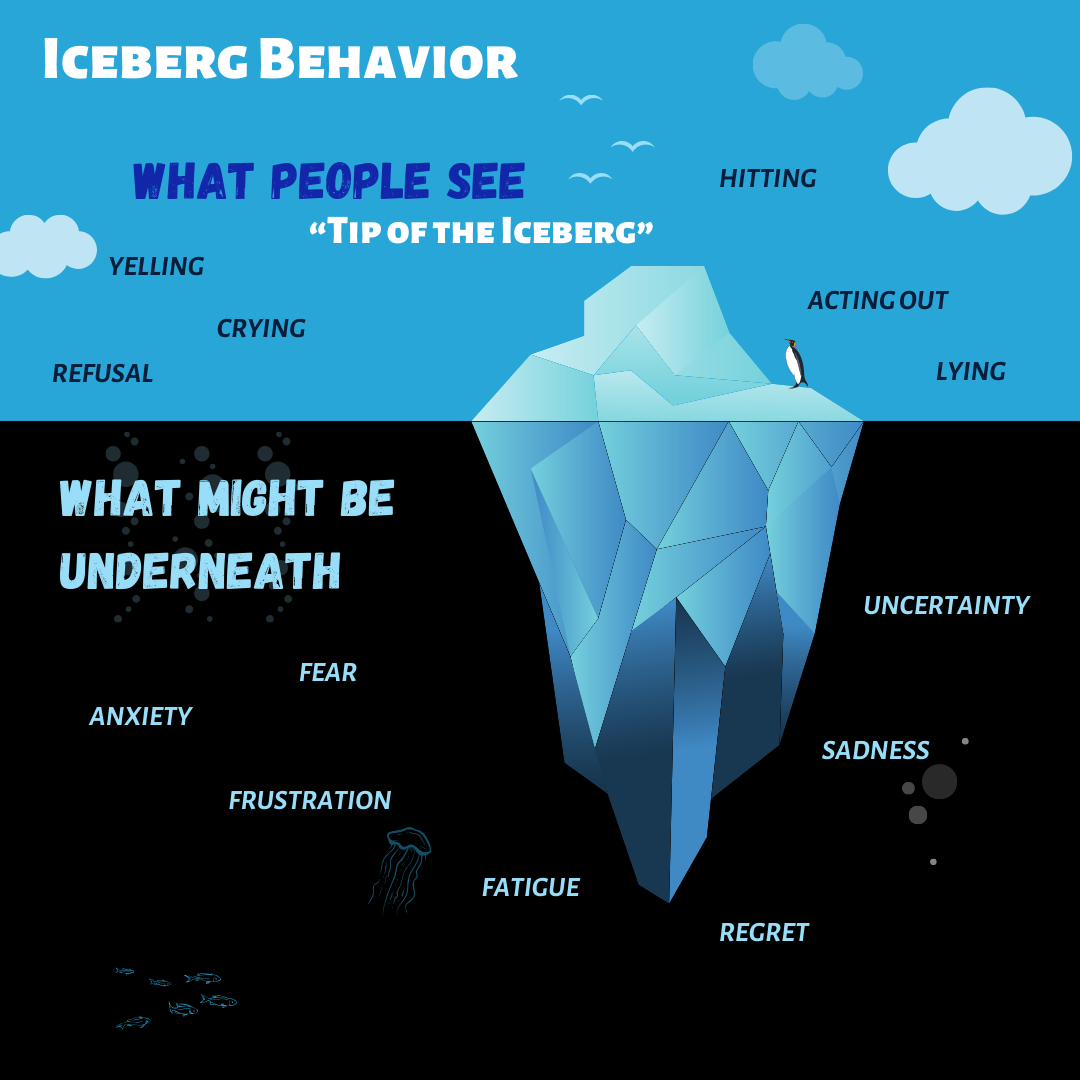 The Iceberg of Behavior
When children have big reactions—like yelling, crying, shutting down, or acting out—it is often just the “tip of the iceberg.” We only see the surface level behavior, but underneath that behavior can be feelings of anxiety, fear, frustration, fatigue, uncertainty, sadness or regret. Here are some tools to look beneath the surface and help your children feel in control of their bodies and minds.
There are some simple strategies that can be done anywhere and anytime to help “reset” the nervous system.
“Take 5” Breath
Ask your child to hold up one hand like a star. Using their other hand’s pointer finger, have them trace up their thumb as they breathe in through their nose. Then ask them to trace down the other side as they breathe out through their mouth. Continue for all five fingers until they feel their heartbeat slow down.
Stuffed Animal Ride
Have your child lie down with a favorite stuffed animal on their belly. Ask them to close their eyes and then breathe slowly – in through the nose and out through the mouth. If they’re doing belly breaths, the stuffed animal will ride up and down like it’s on a wave.
Hot Soup Breathing
Have your child pretend to hold a bowl of hot soup in their hands. Ask them to breathe in to “smell” the delicious soup, and then to breathe out slowly to “cool it down.”
Lemon Squeeze
Ask your child to pretend they’re reaching for a huge lemon, high in a tree. When they grab the “lemon”, ask them to squeeze it as hard as they can so they can make the best lemonade. Encourage them to keep squeezing…and then to finally let go. You can have your child do this with both hands and arms – it’s an excellent way to release tension.
Small Ways to Support Your Student
Predictability is Important
For children who have experienced change or stress, knowing what comes next helps them feel safe. Try to keep bedtimes and morning routines as consistent as possible.
Daily Check-In
Since many of our families are busy or multi-generational, a quick “High/Low” at dinner or bedtime is a great way to connect. Instead of simply asking “how was your day?”, ask “what was the best part of your day?” and “what was the hardest part of your day?”
Self-Care for Caregivers
You are doing the most important job in the world, often under a lot of pressure. Remember that a “calm adult” is the best tool a child has. Taking even one minute for yourself to simply pause and breathe deeply makes a difference.
Questions? Contact us!
Sherita Ross – 678-676-5216 (Counselor for PreK-3rd)
Kate Brambrut – 678-676-5249 (Counselor for 4th and 5th)